





Artificial intelligence has evolved rapidly over the past few years. What started as simple chatbots and virtual assistants has now grown into something much more powerful. One of the most exciting developments in the AI industry today is Agentic AI, a technology that many experts believe could fundamentally change how businesses and individuals use artificial intelligence.
While traditional AI tools are designed to respond to commands and answer questions, Agentic AI takes things a step further. Instead of waiting for instructions at every stage, these systems can plan, make decisions, and complete tasks independently. This shift represents one of the biggest advancements in artificial intelligence since the rise of large language models.
To understand Agentic AI, it helps to compare it with the AI tools most people use today. A typical AI chatbot can answer questions, generate content, or help solve problems. However, once the response is delivered, the task is essentially complete. The user must provide another instruction for the next step.
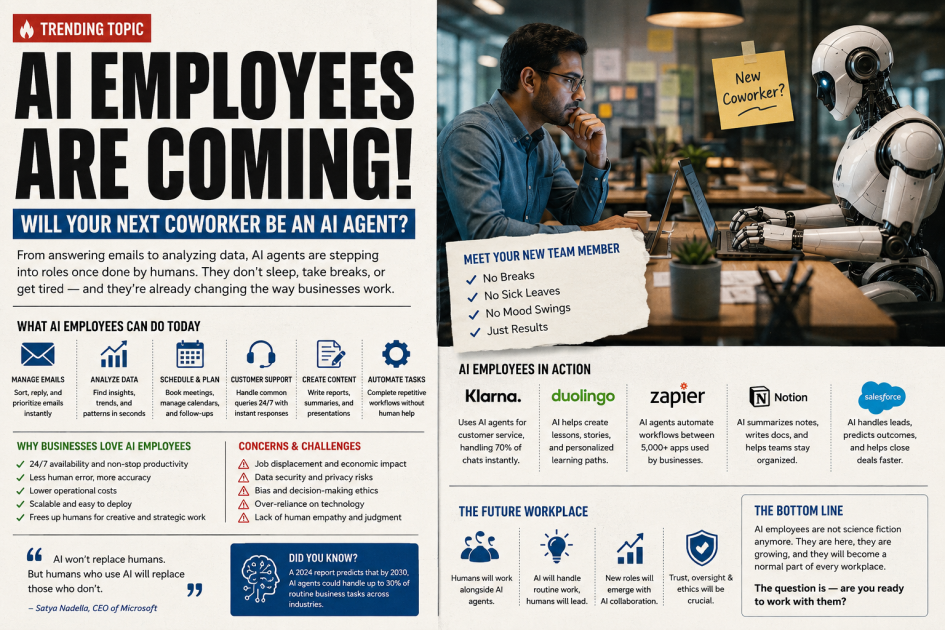
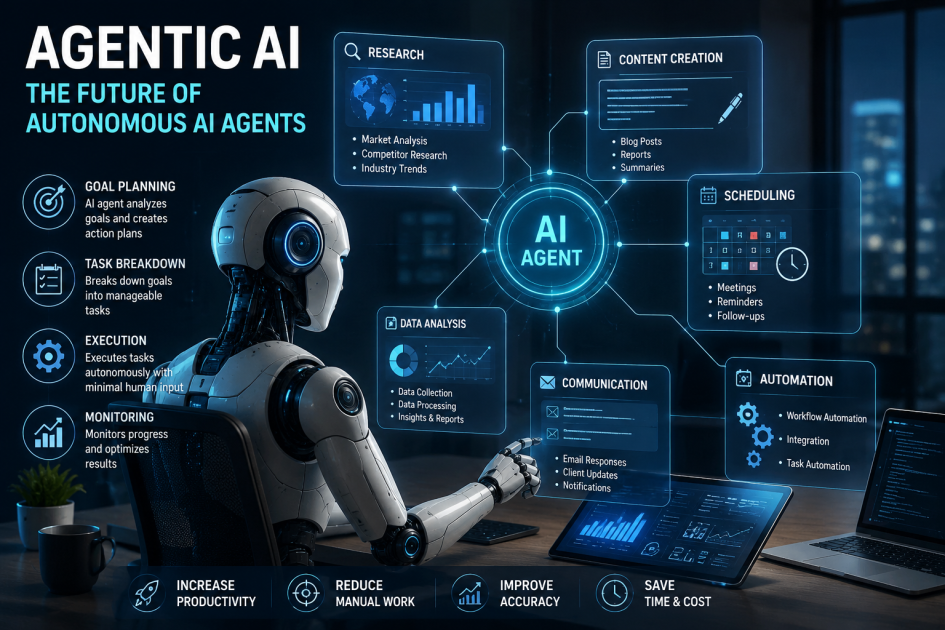
Agentic AI works differently. It can break a goal into smaller tasks, determine the best way to achieve that goal, and execute multiple actions with minimal human involvement. In simple terms, it behaves more like a digital employee than a digital assistant.
Imagine a business owner who wants to analyze competitors, create a market research report, summarize industry trends, and prepare a presentation. A traditional AI tool might assist with individual parts of the process. An AI agent, however, could potentially manage the entire workflow from start to finish.
This ability to operate independently is one of the reasons why Agentic AI is attracting significant attention from technology companies and enterprises around the world. Organizations are constantly looking for ways to improve efficiency, reduce repetitive work, and increase productivity. AI agents offer a solution that goes beyond simple automation.
One area where Agentic AI is already showing promise is customer support. Instead of relying on scripted responses, AI agents can understand customer issues, search for relevant information, perform troubleshooting steps, and even escalate complex cases when necessary. This creates a more efficient and personalized support experience.
Software development is another field experiencing the impact of autonomous AI systems. Developers are beginning to use AI agents to write code, test applications, identify bugs, and generate documentation. Rather than serving as a simple coding assistant, these systems can participate in multiple stages of the development process.
Marketing teams are also exploring the benefits of Agentic AI. An AI agent can research keywords, analyze competitors, generate content ideas, schedule campaigns, monitor performance, and recommend improvements. Tasks that once required several hours of manual work can now be completed much faster.
Despite its impressive capabilities, Agentic AI is not without challenges. One of the biggest concerns involves reliability. Because AI agents can make decisions independently, organizations must ensure that their actions align with business goals and ethical standards. A poorly configured AI agent could potentially make mistakes that have real-world consequences.
Security is another important consideration. Since AI agents often interact with company systems, databases, and sensitive information, businesses must implement strong safeguards to prevent unauthorized access or misuse.
There are also questions about the future of employment. As AI agents become more capable, some routine tasks may become fully automated. However, many experts believe that rather than replacing workers entirely, AI will shift the nature of work. Employees may spend less time on repetitive activities and more time focusing on strategy, creativity, and decision-making.
Technology companies are investing heavily in this area because they see Agentic AI as the next major phase of artificial intelligence. Industry leaders are developing platforms that allow organizations to build specialized AI agents tailored to their specific needs. From healthcare and finance to education and e-commerce, the potential applications are virtually endless.
For consumers, the impact may become visible through smarter digital assistants that can handle everyday responsibilities such as booking appointments, managing schedules, comparing products, and organizing personal tasks. Instead of simply answering questions, future AI systems may actively help users achieve their goals.
As the technology continues to mature, Agentic AI could become one of the defining innovations of the decade. Businesses that adopt it early may gain significant advantages in productivity and efficiency, while individuals could benefit from more capable and intelligent digital tools.
In conclusion, Agentic AI represents a major shift in how artificial intelligence operates. By moving beyond simple responses and toward autonomous action, AI agents are opening new possibilities across industries. While challenges related to security, reliability, and ethics remain important, the potential benefits are too significant to ignore. As we move further into 2026 and beyond, Agentic AI is likely to play a central role in shaping the future of work and technology.