





AI Shopping Assistants: The Future of Online Shopping Has Already Started
Online shopping has changed dramatically over the past decade. What once involved visiting multiple stores, comparing prices manually, and spending hours reading reviews can now be done within minutes. As technology continues to evolve, artificial intelligence is becoming one of the biggest forces shaping the future of e-commerce.
One of the most exciting developments in this space is the rise of AI shopping assistants. These intelligent systems are designed to help consumers find products, compare options, track prices, and make better purchasing decisions. While many people may not realize it, AI is already influencing a large portion of the online shopping experience.
When customers browse an online store, the products they see are often selected using artificial intelligence. Recommendation engines analyze browsing history, previous purchases, and user behavior to suggest items that match individual interests. This is why two people visiting the same website may see completely different product recommendations.
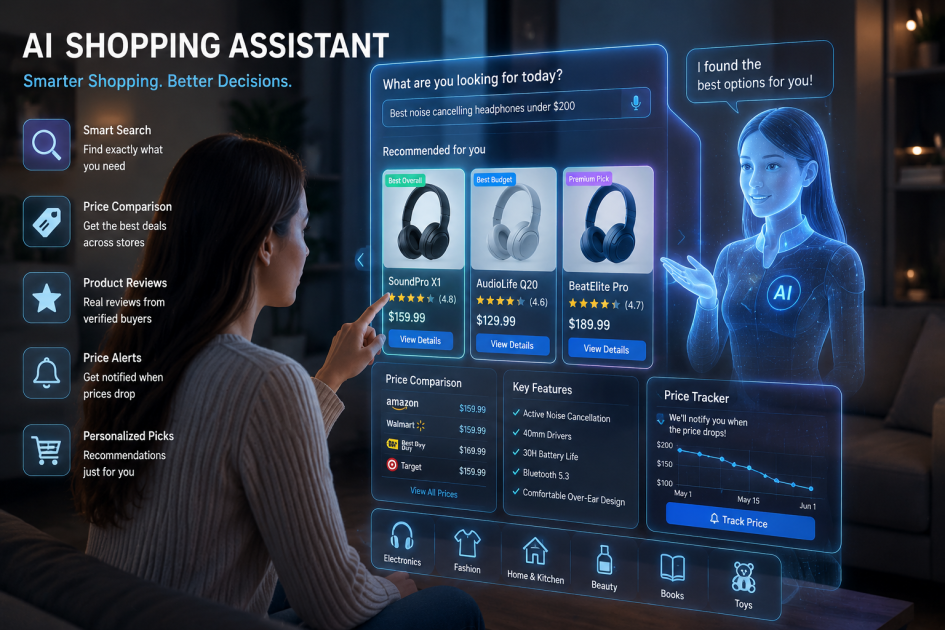
However, AI shopping assistants are moving beyond simple recommendations. Modern systems are becoming capable of understanding user preferences in much greater detail. Instead of searching through hundreds of listings, shoppers can simply describe what they need, and the AI can identify suitable products based on specific requirements.
For example, a customer looking for a laptop may tell an AI assistant that they need a device for graphic design, video editing, and occasional gaming within a specific budget. Rather than presenting dozens of options, the AI can narrow the selection to a few highly relevant choices and explain why they are suitable.
This level of personalization is becoming increasingly important as online marketplaces continue to expand. Consumers often face decision fatigue when presented with too many options. AI helps simplify the process by filtering products based on quality, price, features, and customer preferences.
Price comparison is another area where artificial intelligence is making a significant impact. Traditionally, shoppers had to visit multiple websites to compare prices and determine the best deal. AI assistants can now perform this task automatically by scanning multiple sources and presenting the most competitive options in seconds.
Some advanced systems can even monitor product prices over time and notify users when an item reaches a desired price point. This allows shoppers to make more informed decisions and avoid overpaying.
Customer support is also benefiting from AI integration. Many online retailers now use intelligent virtual assistants to answer questions, process returns, track shipments, and provide product information. Unlike traditional chatbots that rely on predefined responses, modern AI assistants can understand context and deliver more helpful interactions.
For businesses, AI shopping assistants offer several advantages beyond improving customer experience. Retailers can gain valuable insights into customer behavior, identify emerging trends, and optimize inventory management. By understanding what customers are searching for and purchasing, businesses can make better decisions regarding product selection and marketing strategies.
Artificial intelligence is also changing how products are marketed. Instead of showing the same advertisements to everyone, AI can create highly targeted campaigns based on individual interests and browsing habits. This approach often results in higher engagement and better conversion rates.
Despite these benefits, there are concerns about the growing role of AI in online shopping. Privacy remains one of the most important issues. Since AI systems often rely on user data to provide personalized recommendations, consumers want assurance that their information is being collected and used responsibly.
Another challenge involves transparency. Some experts argue that customers should clearly understand how AI-generated recommendations are created and whether commercial partnerships influence the products being suggested.
Looking ahead, AI shopping assistants are expected to become even more capable. Future systems may be able to complete purchases on behalf of users, manage recurring orders, negotiate discounts, and provide highly personalized shopping experiences. Instead of simply helping consumers find products, AI could eventually act as a personal shopping manager.
Major technology companies and e-commerce platforms are investing heavily in this technology because they recognize its potential to transform retail. As AI continues to improve, the line between human assistance and digital assistance may become increasingly blurred.
In conclusion, AI shopping assistants are reshaping the online shopping experience by making it faster, smarter, and more personalized. From product discovery and price comparison to customer support and purchase recommendations, artificial intelligence is helping consumers make better decisions while enabling businesses to operate more efficiently. As adoption continues to grow, AI is likely to become an essential part of the future of e-commerce.